
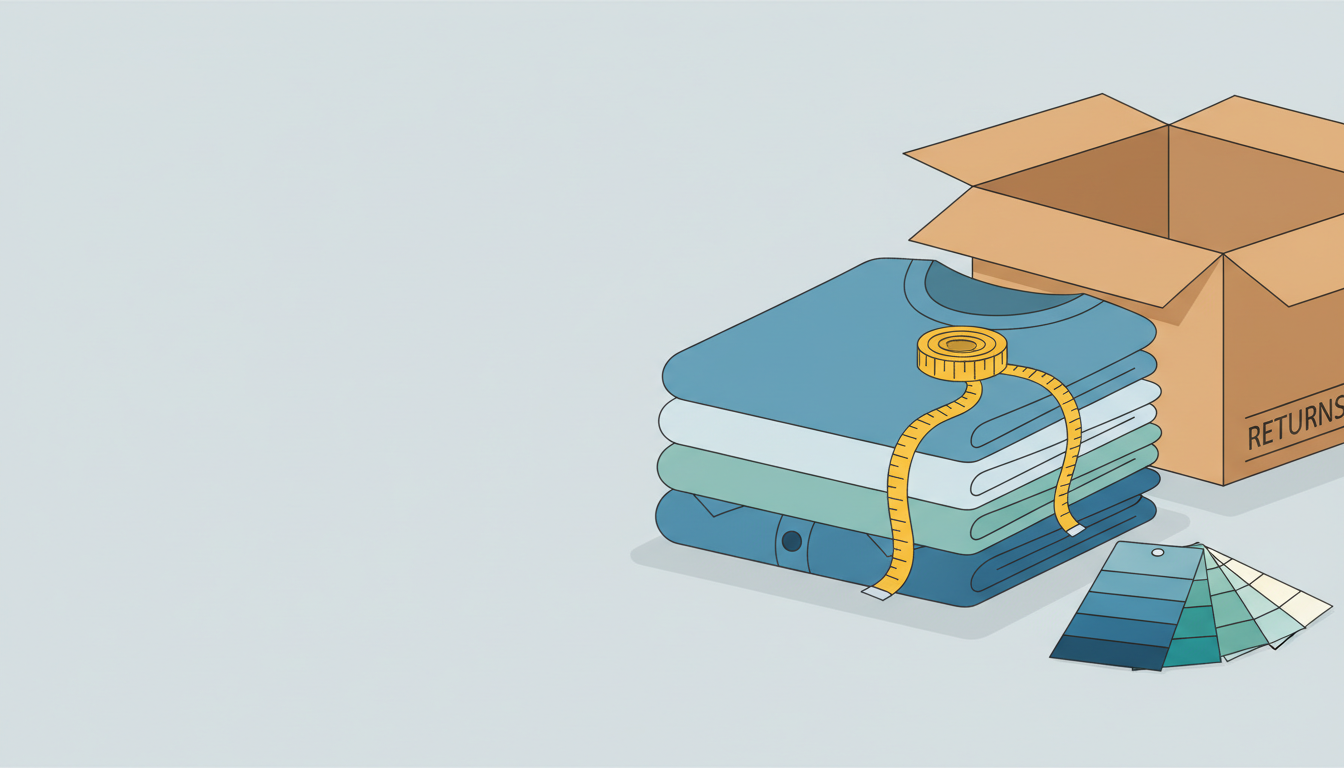
Why size and color mismatches cause the most returns, and how to stop them
Ask almost any online apparel, footwear or home-décor team why parcels come back, and the answer is the same: it didn’t fit, or it didn’t look the way it did online. Industry surveys regularly put fit and appearance at the top of the list of return reasons, well ahead of damage or late delivery. Those two causes are also the most preventable, which is why they deserve the first slice of your attention.
Why size is such a stubborn problem
A “medium” is not a measurement. It is a label each brand defines for itself, based on its own fit model, its own pattern blocks and often its own target market. A medium from one label can be a small from another. Within a single brand the same size can shift between fabrics, or between a slim and a relaxed cut.
Shoppers know this, so they hedge. Unsure between two sizes, they order both and plan to send one back. This habit, often called bracketing, turns a single purchase into a guaranteed return, and it’s a rational response to unclear information.
Size charts rarely help as much as we hope. They list garment or body dimensions in a table, and the shopper must work out where their own body falls, while also guessing how the fabric stretches. Many simply skip the chart and take a chance.
Why color goes wrong
Color is harder to control than it looks, because the product photo is only a rendering of the product. Screen brightness, color profiles, studio lighting, editing and camera sensors all change what the shopper sees. A dusty sage can look mint; a navy can look black.
Texture and finish add to the problem. Matte, satin and brushed surfaces catch light differently, and a flat photo can’t convey that. When the box opens and the shade feels “off”, the item goes back, even if nothing is wrong with it.
Most of these returns aren’t product defects. They’re expectation defects, and expectations are something you can shape before checkout.
What these returns really cost
A return is more than a refund. You pay for outbound and return shipping, inspection, repackaging and sometimes markdowns, and some items can’t be resold at full price at all. There’s a softer cost too: a shopper who has to return a purchase twice is less likely to come back. Reducing mismatches protects margin and the relationship together.
How to reduce them
- Show real measurements, not only labels. List garment dimensions per size, and add the model’s height and the size they’re wearing. It takes minutes per product and answers the question shoppers actually have.
- Use customer fit feedback. Ask buyers whether an item ran small, true or large, and display the summary on the product page. Peer information is more trusted than brand claims.
- Offer fit tools that fit the product. Size recommenders, short fit quizzes, or “find your size from a favorite item” can cut guesswork. Keep them quick; a long quiz loses people before they buy.
- Photograph for color accuracy. Shoot in consistent, neutral light, avoid heavy filters, and show the item in several settings. Name colors precisely (“dark teal”, not just “green”) and keep the name consistent across channels.
- Add swatches and detail shots. Close-ups of texture and finish do more than extra lifestyle images. For high-stakes colors, such as paint, upholstery or cosmetics, offer physical samples.
- Use video and diverse models. Seeing fabric move on bodies of different shapes and heights helps shoppers judge drape and fit.
- Be honest in descriptions. If a cut runs narrow, or a shade looks different in sunlight, say so. A slightly lower conversion on one page is usually cheaper than a return.
- Close the loop with return data. Require a return reason, then review it by product. If one style keeps coming back as “too small”, fix the size guidance or the pattern, not the policy.
Where to start
You don’t need to do everything at once. Pull your last quarter’s returns, sort by reason and find the ten products with the highest mismatch rates. Improve the measurements, photos and descriptions on those first, then watch what happens over the following month. Small content fixes on a handful of problem products often move the numbers more than a sweeping policy change.
Shoppers aren’t trying to be difficult. They want to know what they’re getting, and every detail you add before purchase is a return you may not have to process afterward.
How I can help
I’m Rajinder Singh Attar, a Lead Website Administrator at Fabindia Limited with more than 14 years in enterprise e-commerce. Fixing size and color mismatches is the kind of work I do every week, and I’d be glad to help your store with it.
- Catalog and attribute clean-up: consistent fit, fabric and color attributes that power accurate filters and search.
- Product page improvements: size guidance, fit notes and color presentation built into the storefront.
- Platform experience: Shopify Plus, SAP Commerce Cloud, Oracle Commerce Cloud, Magento and WooCommerce, including a full migration from SAP Commerce Cloud to Shopify.
- Technical SEO: URL mapping, 301 redirects and metadata retention, so changes don’t cost you rankings.
- AI search and discovery: working with tools such as Unbxd and Wizzy to improve product discovery and conversion.
- Front-end and weekly audits: HTML, CSS and JavaScript work, plus regular checks for broken links and Core Web Vitals.